

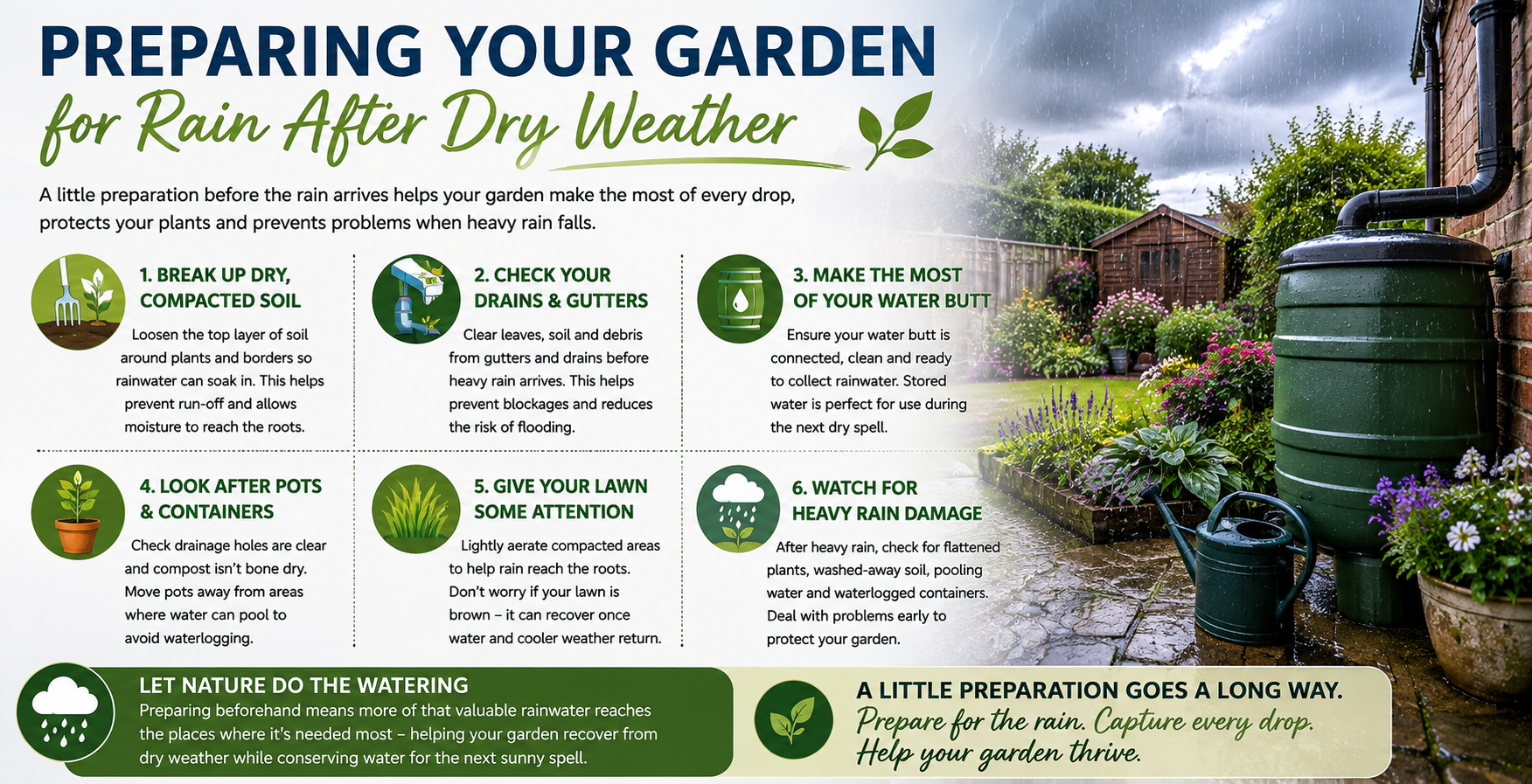
After a long period of hot, dry weather, the arrival of rain can be very welcome. However, when soil has become particularly dry and hard, heavy rainfall can sometimes create problems rather than immediately providing the gentle soaking your garden needs.
Taking a little time to prepare your garden before the rain arrives can help plants, lawns and borders make the most of every drop.
Break Up Dry, Compacted Soil
Very dry soil can become hard and compacted, making it difficult for rainwater to penetrate. Instead of soaking into the ground, heavy rain may simply run across the surface.
Gently loosening the top layer of soil around plants and borders can help water penetrate more effectively. Take care around established plants so that you don’t damage their roots.
Check Your Drains and Gutters
Leaves, soil and garden debris can quickly block drains and gutters. After weeks of dry weather, it is worth checking them before heavier rain arrives.
Clearing debris helps rainwater drain away properly and reduces the risk of localised flooding around patios, paths and buildings.
Make the Most of Your Water Butt
Rain following a prolonged dry spell provides the perfect opportunity to replenish your stored water supplies.
Check that your water butt is connected correctly, clear any leaves or debris from the inlet and make sure there is room to collect the incoming rain. The water you save can then be used during the next dry period.
Look After Pots and Containers
Containers can become extremely dry during hot weather. Surprisingly, very dry compost doesn’t always absorb heavy rain efficiently and water can run straight through or around it.
Check your pots before heavy rain and make sure their drainage holes aren’t blocked. Moving vulnerable containers away from areas where large amounts of water collect can also prevent plants becoming waterlogged.
Give Your Lawn Some Attention
A lawn that has experienced prolonged dry conditions may have become hard, brown or compacted. Before rain arrives, lightly aerating particularly compacted areas can help water reach the grass roots rather than simply running away.
Don’t worry if your lawn has turned brown. Established grass can be remarkably resilient and will often begin recovering naturally once cooler, wetter conditions return.
Watch for Heavy Rain Damage
After a prolonged dry spell, sudden heavy rain can flatten plants, wash soil from borders and create areas of standing water.
Once the rain has passed, check your garden for damaged plants, waterlogged containers, washed-out soil and pooling water. Tackling these problems early can prevent more serious damage.
Let Nature Do the Watering
After weeks of carefully watering the garden, rainfall gives you the opportunity to turn off the hose and let nature take over.
Preparing beforehand means more of that valuable rainwater reaches the places where it’s needed most – helping your garden recover from dry weather while conserving water for the next sunny spell.
A LITTLE PREPARATION GOES A LONG WAY.
Prepare for the rain. Capture every drop. Help your garden thrive.


